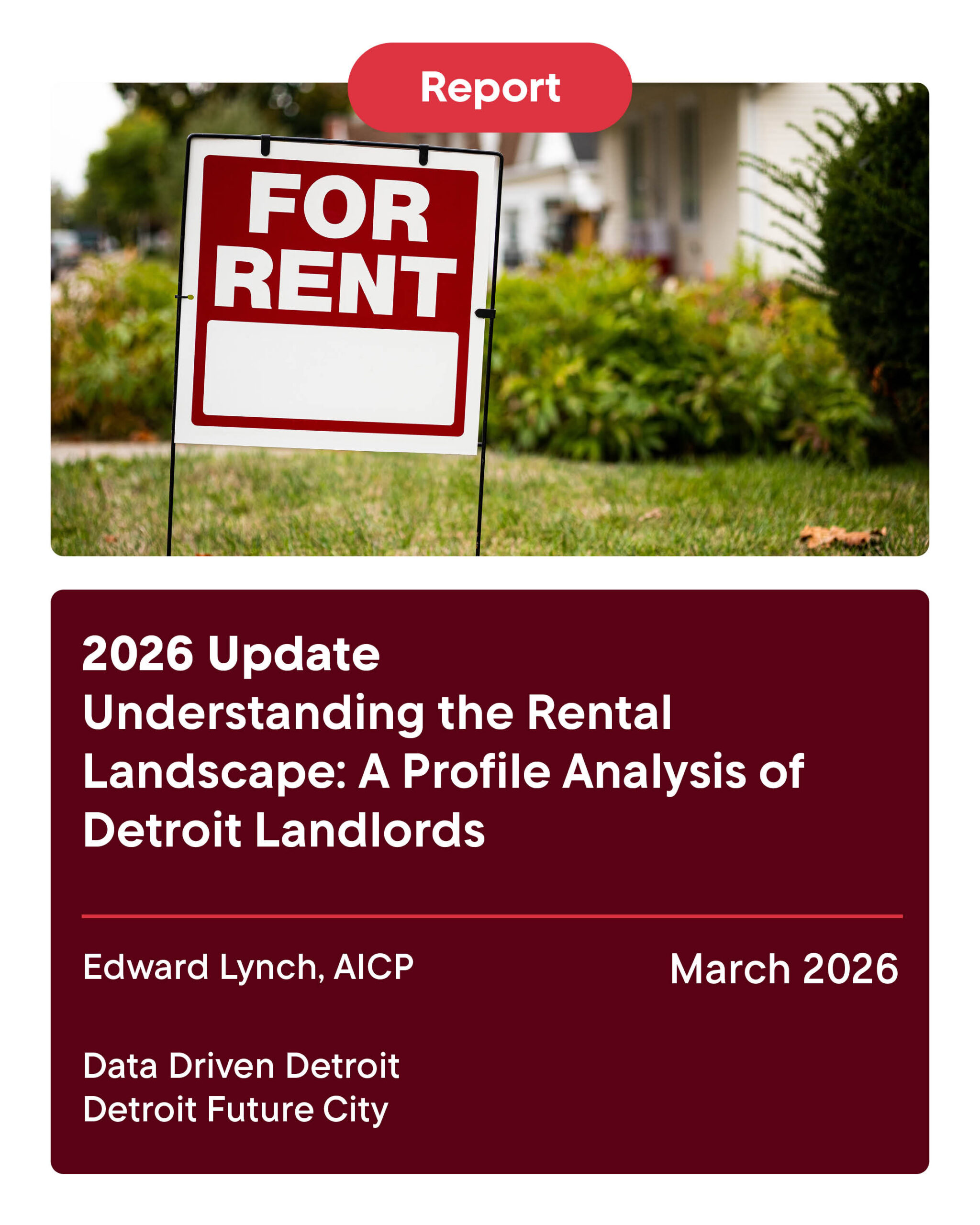
The rental housing system in Detroit is both complex and critical to the city’s overall housing stability—and new research is helping to better understand the people at its center. In 2026, the Rocket Community Fund commissioned a report conducted by Data Driven Detroit and Detroit Future City to better understand the rental landscape in Detroit. This updated report provides comprehensive insight into the people who own and operate rental housing across the city – and the challenges they face.
The report finds that Detroit’s rental market is largely driven by small-scale landlords. Of the more than 54,000 landlords identified, 93% own just one or two properties, collectively managing the majority of the city’s rental units. These “mom-and-pop” landlords are not only essential housing providers, but they are also small business owners who are unable to access the support available to entrepreneurs. They must navigate a challenging and often unpredictable system without help or essential resources.
The data shows that most landlords are local—65% have a Detroit address—highlighting an opportunity to build wealth within the community while stabilizing neighborhoods. At the same time, the report challenges commonly held assumptions about landlord behavior. A majority (62%) show no indicators of predatory or harmful practices, suggesting that many are working in good faith despite systemic pressures and a lack of small business support.
Those pressures are significant. Through both data analysis and focus groups, landlords reported ongoing challenges including navigating city processes, financing repairs and maintenance, and managing tenant-related issues—particularly non-payment of rent and lengthy eviction timelines. These barriers can strain already thin margins, especially for smaller landlords who rely on consistent rental income to sustain their properties.
“This research provides a critical foundation for Rocket Community Fund and Gilbert Family Foundation’s housing stability strategy,” says Beth Sorce, Senior Director of Housing Stability at Rocket Community Fund. “By grounding our work in both data and lived experiences, we can better design solutions that improve housing quality for Detroit renters, support responsible landlords, and ultimately create more stable, equitable communities across Detroit.”
The findings highlighted in the report point to a clear takeaway: improving housing stability in Detroit requires a more nuanced and collaborative approach. Supporting landlords—especially small, local ones—must be part of the solution alongside tenant protections. Policies and programs that streamline processes, expand access to financial resources, and foster better landlord-city relationships can help strengthen the entire rental ecosystem.